
The search landscape is undergoing its biggest transformation since Google’s launch 25 years ago. Millions of people are now turning to ChatGPT, Claude, and Gemini instead of Google when they need answers to questions. This isn’t just a temporary trend; it’s a fundamental shift in how people discover information.
But here’s what most people don’t realize: Behind the scenes, these AI chatbots are searching the web to gather current information before crafting their responses, just like you do.
When ChatGPT tells you about the latest iPhone features or ChatGPT explains current market trends, they’re searching the web first—just like you would on Google. The difference? They’re using different search engines than the ones you might expect.
This creates a massive opportunity and a hidden risk for your business. If your content appears in the search engines that AI systems rely on, you could get featured in thousands of AI conversations. But if you’re optimizing for just Google, you might be missing out on a lot of opportunities.
In this guide, I’ll show which search engines power each major AI platform as of June 2025 and show you how to optimize for this new world of AI-driven search.
How AI Chatbots Get Real-Time Information: The Web Search Layer
Here’s something that might surprise you: When you ask ChatGPT about today’s stock prices or the latest news, it doesn’t already know those answers! Instead, it does exactly what you’d do: it searches the web.
The difference is speed. While you might spend minutes browsing through search results, AI systems gather information in seconds and present it as a seamless, conversational response. But make no mistake; there is a search engine being used behind the scenes.
You can actually watch this happen. When you ask ChatGPT questions that need current information, it shows you its search process:
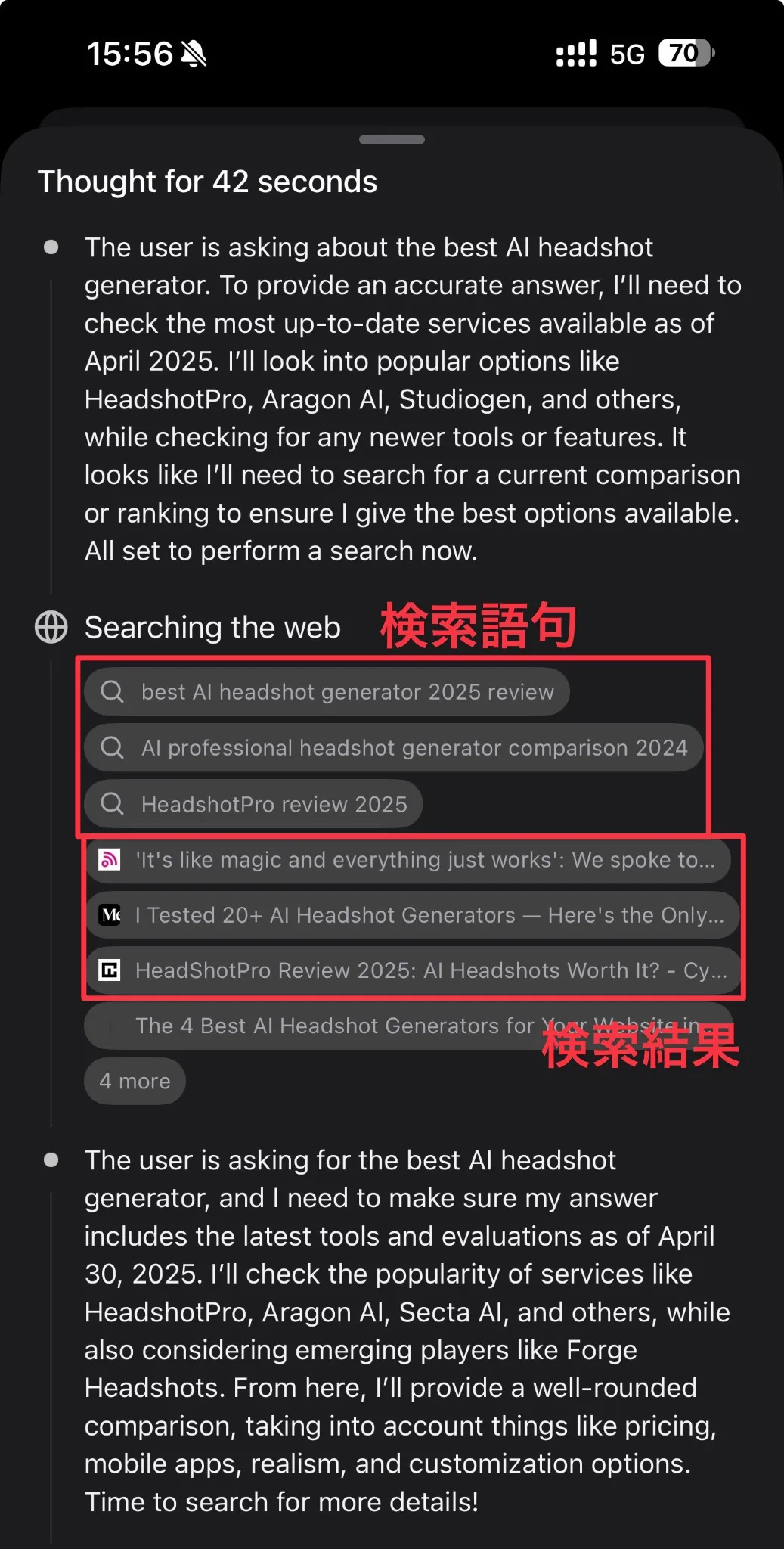
Every time someone asks an AI about your industry, product, or expertise area, that AI is searching the web to find credible information. If your content shows up in those searches, you get mentioned in the AI’s response. If it doesn’t, you’re invisible.
So, does that mean you should just continue to do your old SEO for Google? Not exactly. A useful step in understanding a system is to decompose their parts and understand how each part effects the whole. Here, we will decompose how AI chatbots arrive at their final answers by focusing on one of the ingredients: what search engines they use.
The information below represents my best research efforts. While there may be some errors, this reflects the most reliable information currently available.
The Complete Map: Which Search Engines Power Each AI Platform
AI chat services don’t publicly disclose which search engines they use, but through research and analysis, here’s what we’ve uncovered:
Google Gemini: Google Searching on Steroids
Search Engine Used: Google Search
Gemini naturally uses Google Search internally, though the search engine powering Gemini may differ slightly from consumer Google Search with potential access to fresher indices or different ranking factors.
What makes Gemini unique: This is just a guess, but Gemini likely employs dynamic data gathering strategies based on the specific query. For complex research questions, it may go narrow-and-deep, diving into authoritative sources and following citation chains. For broader queries, it might cast a wide net across multiple topics and sources. This adaptive approach means Gemini’s reasoning engine determines the optimal information gathering strategy for each individual question, making it more sophisticated than simple keyword-based searches.
Optimization Strategy: Focus on traditional Google SEO fundamentals:
- High-quality, authoritative content
- Strong E-E-A-T signals (Experience, Expertise, Authoritativeness, Trustworthiness)
- Featured snippet optimization
- Technical SEO excellence
- Comprehensive topic coverage (for wide searches) and deep expertise (for narrow searches)
ChatGPT (o3/o4-mini) & SearchGPT: The Microsoft Connection
Search Engine Used: Bing (with potential hybrid approaches)
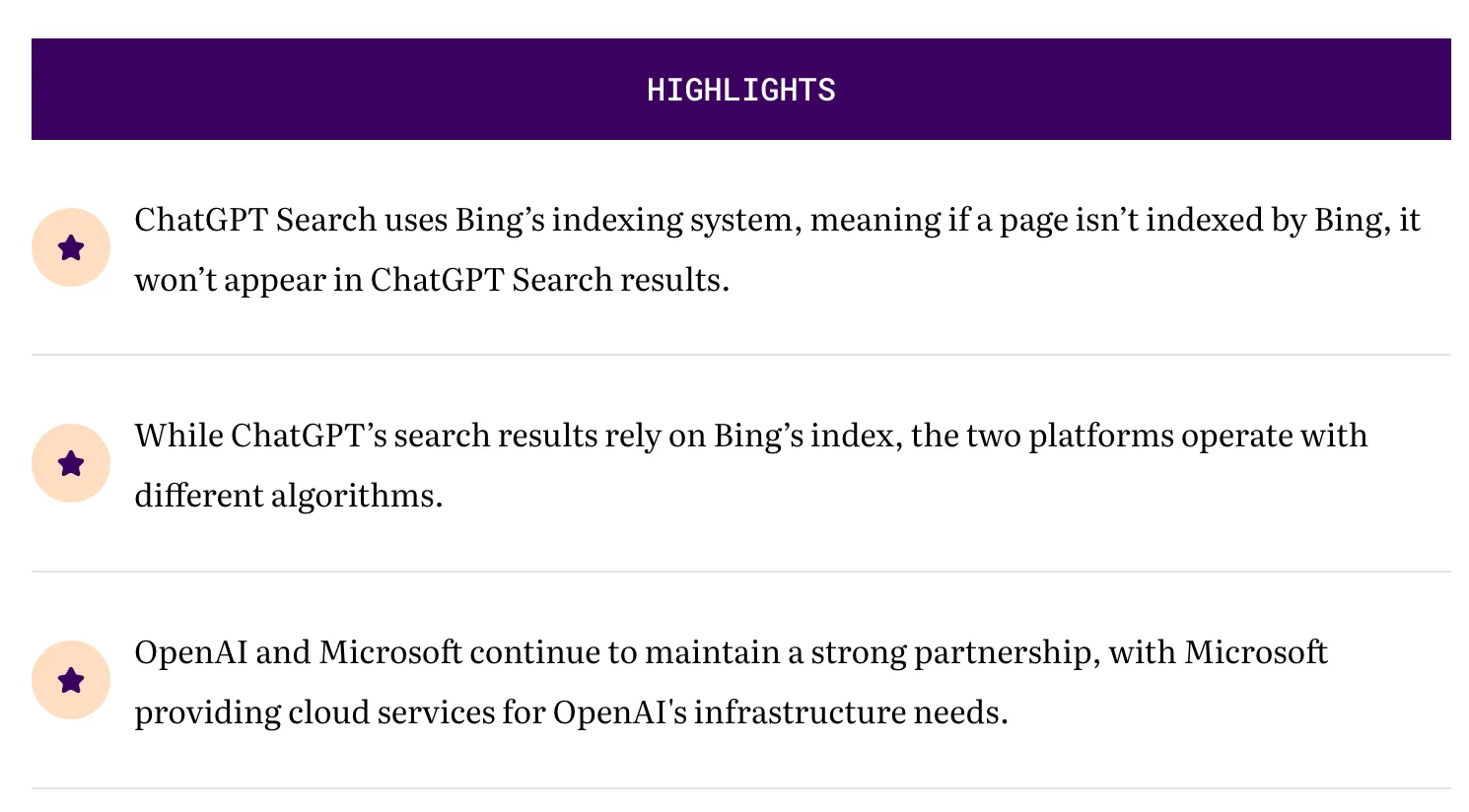
OpenAI continues expanding its services, and as of November 2024, SearchGPT reportedly uses Bing . Given Microsoft’s close partnership with OpenAI at least historically, Bing likely remains their primary search foundation. However, proprietary bots like OAI-SearchBot are appearing more frequently in website access logs, suggesting OpenAI may be building its own search index — though this remains speculative.
The o3 and o4-mini models also integrate search engines into their reasoning processes, and they likely use Bing as their primary source as well.
Optimization Strategy: Prioritize Bing SEO:
- Optimize for Bing Webmaster Tools
- Focus on clear, structured content with strong headings
- Ensure robust social signals (Bing weighs these more heavily than Google)
- Submit XML sitemaps to Bing
- Build quality backlinks from authoritative domains
Key Bing-specific optimization tactics:
- Exact match keywords in URLs and domain names (Bing weighs this more heavily than Google)
- Social media signals matter more - active presence on Facebook, Twitter, and LinkedIn can boost rankings
- Domain age carries significant weight - older, established domains get preference
- Meta keywords tag (which Google ignores completely) still has some influence on Bing
- Clear, descriptive content structure with proper H1-H6 tags and keyword-rich meta descriptions
- Multimedia content optimization - Bing’s crawlers can better understand images and videos than Google’s
- Less tolerance for thin content - Bing prefers comprehensive, in-depth articles over shorter pieces
Perplexity AI: The Independent Player
Search Engine Used: Perplexity’s proprietary index (PerplexityBot)
Although Perplexity initially used Bing’s API when it launched in 2022, it now builds its own index using PerplexityBot. Perplexity AI This likely explains Perplexity’s dramatically faster response times compared to ChatGPT’s o3/o4-mini models. Since Perplexity focuses on indexing trusted sources from a curated subset of the web rather than the entire internet, domain authority becomes particularly crucial.
Worth noting: Perplexity faced controversy last year for allegedly ignoring robots.txt files, which was covered in Japanese media as well.
Optimization Strategy: Focus on authority-building:
- Establish your domain as a trusted source in your industry
- Create comprehensive, well-researched content
- Build authoritative backlinks from recognized industry publications
- Ensure your site is easily crawlable (despite the robots.txt controversy)
- Focus on topical authority rather than broad keyword targeting
Claude: Uses Brave Search Behind the Scenes
Search Engine Used: Brave Search
Claude recently added web search functionality , and enterprise SEO company BrightEdge reports that it uses Brave Search behind the scenes.
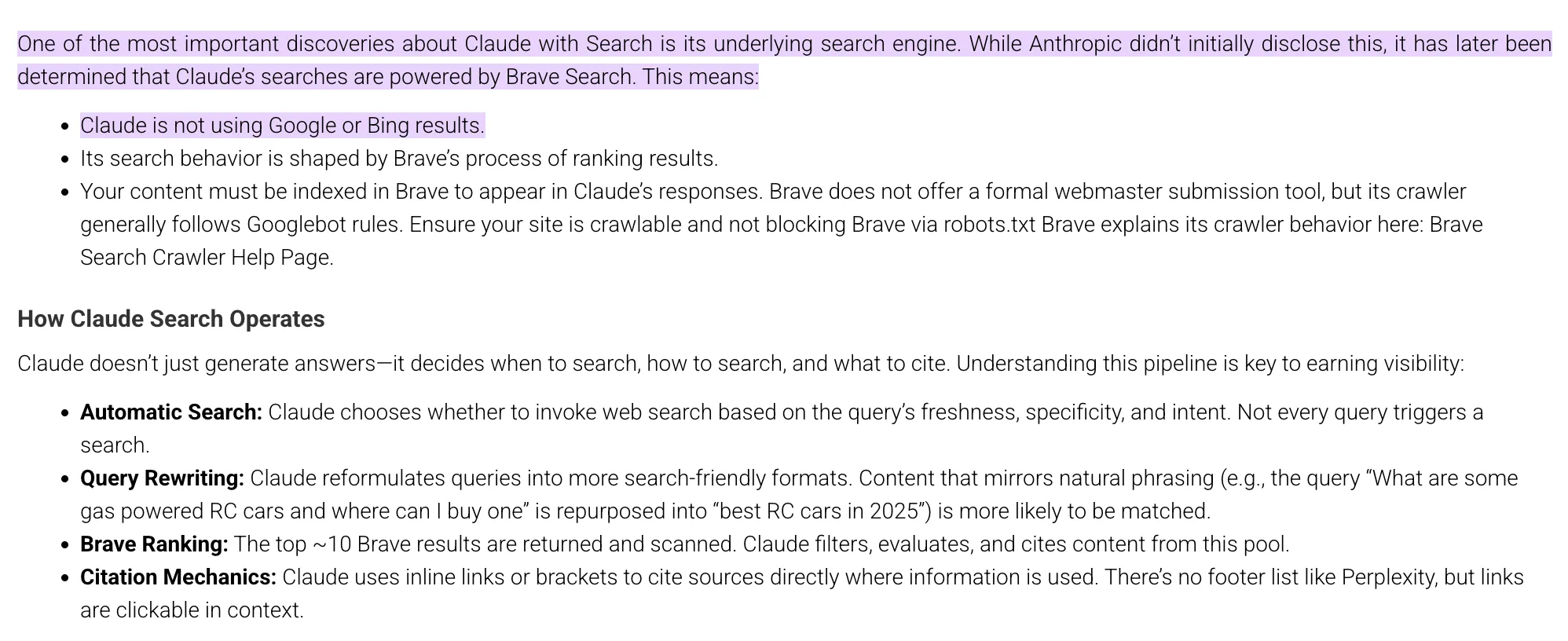
Brave Search is a search engine that started from using Bing’s API at first but now does its own indexing of the web. They use their “Web Discovery Project” which anonymously collects sites Brave Browser who join the WDP program visit. Although the number of Brave Browser users is increasing, it is still a small percentage of the overall search market. Also, those that join the WDP program are a smaller percentage of the Brave Browser users. As a result, I personally have felt the search results are quite biased especially for non-English content and niche topics, at least as of the end of May 2025.
Based on personal testing on Claude.ai, Claude seems to use the top 10 search results from Brave Search, use the content of each to synthesize a response, and then return the response to the user. The synthesis is pretty good, which helps the final AI response to be quite accurate.
Bing Copilot: The Microsoft Ecosystem
Search Engine Used: Bing
Bing Copilot uses Bing internally, though the implementation may differ from consumer-facing Bing search with potential enterprise-specific modifications.
Optimization Strategy: Same as ChatGPT - focus on Bing SEO best practices.
Why AI Companies Rely on Existing Search Infrastructure
Building a comprehensive search engine is extraordinarily expensive and complex. Consider these challenges:
- Infrastructure costs: Accessing, crawling, and indexing billions of web pages requires massive computational resources
- Technical complexity: Managing real-time updates, preventing server overload, and handling spam
- Legal considerations: Respecting robots.txt files, managing crawl rates, and avoiding legal issues
This is why many AI services rely on established search APIs like Bing’s. Many companies likely use hybrid approaches, such as retrieving top results from Bing’s API and then using proprietary crawlers to index only those high-quality sources.
What this means for marketers: Focus your efforts on the major search engines rather than trying to optimize for proprietary AI crawlers that may not exist yet.
Your AI SEO Action Plan: Platform-Specific Strategies
| AI Platform | Search Engine | Priority Actions |
|---|---|---|
| Google Gemini | Traditional Google SEO + Featured snippets | |
| ChatGPT/SearchGPT | Bing | Bing Webmaster Tools + Social signals |
| Perplexity AI | Proprietary | Domain authority + Comprehensive content |
| Claude | Brave Search | Quality content + Privacy-focused optimization |
| Bing Copilot | Bing | Same as ChatGPT strategies |
Universal AI SEO Best Practices
Regardless of which search engine powers your target AI platform:
- Create comprehensive, authoritative content that answers questions completely
- Structure your content clearly with proper headings and schema markup
- Build domain authority through quality backlinks and consistent publishing
- Optimize for featured snippets and question-based queries
Conclusion: Your Competitive Advantage in the AI Era
The shift from traditional search to AI-powered answers represents the biggest change in information discovery since Google’s launch. Early movers who understand and optimize for AI search engines will gain a significant competitive advantage.
Key takeaways for brand owners and SEO professionals:
- Diversify your search optimization beyond Google to include Bing, Brave Search, and Perplexity
- Focus on comprehensive, authoritative content that AI systems can confidently cite
- Monitor multiple AI platforms for brand mentions and optimization opportunities
- Stay agile as the landscape continues to evolve rapidly
The era of Google-only SEO is ending. The companies that adapt fastest to this multi-engine, AI-powered search landscape will capture the most visibility in tomorrow’s AI-driven conversations.
Need help navigating this complex landscape?
I offer consulting services covering both traditional SEO and emerging AI optimization strategies (GEO, LLMO, AEO, AIVO). Whether you're looking to audit your current AI SEO readiness or develop a comprehensive optimization strategy, I'd love to help. Contact me to discuss how we can get your brand featured in AI conversations.